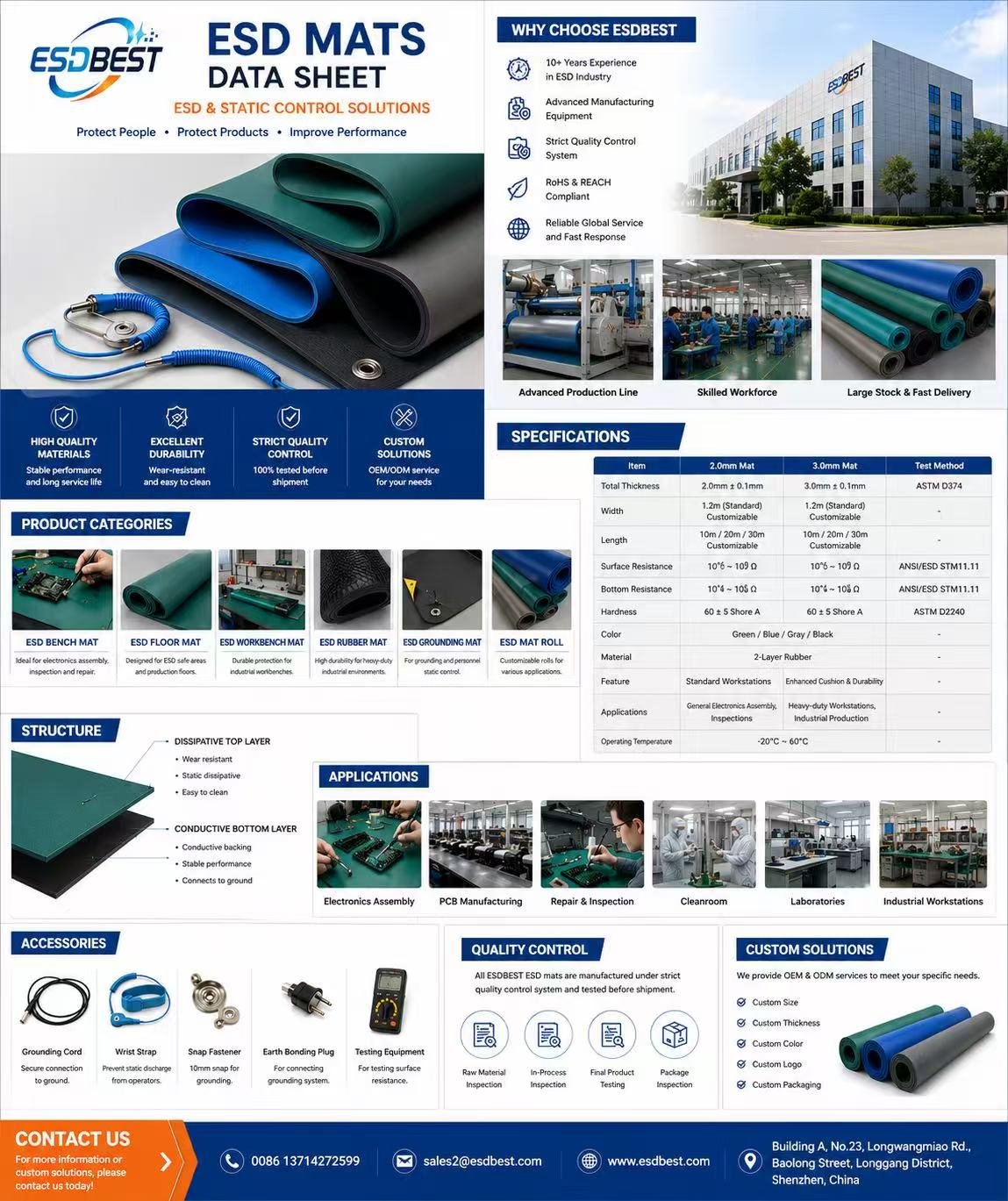
Complete Guide for Electronics Manufacturing
Electrostatic discharge (ESD) is one of the most common hidden causes of electronic component failures. Even a tiny static discharge that is invisible to the human body can permanently damage integrated circuits, semiconductors, printed circuit boards (PCBs), and precision electronic assemblies.
An ESD mat is one of the most important components of an ESD Protected Area (EPA). It provides a controlled static-dissipative work surface that safely channels electrostatic charges to ground, helping protect sensitive electronic devices during assembly, testing, repair, packaging, and inspection.
Whether you operate an SMT production line, PCB assembly workshop, semiconductor facility, laboratory, or electronics repair station, understanding how ESD mats work is essential for building an effective static control program.
This guide explains everything you need to know about ESD mats, including materials, resistance, grounding, testing, applications, standards, and how to choose the right solution for your business.
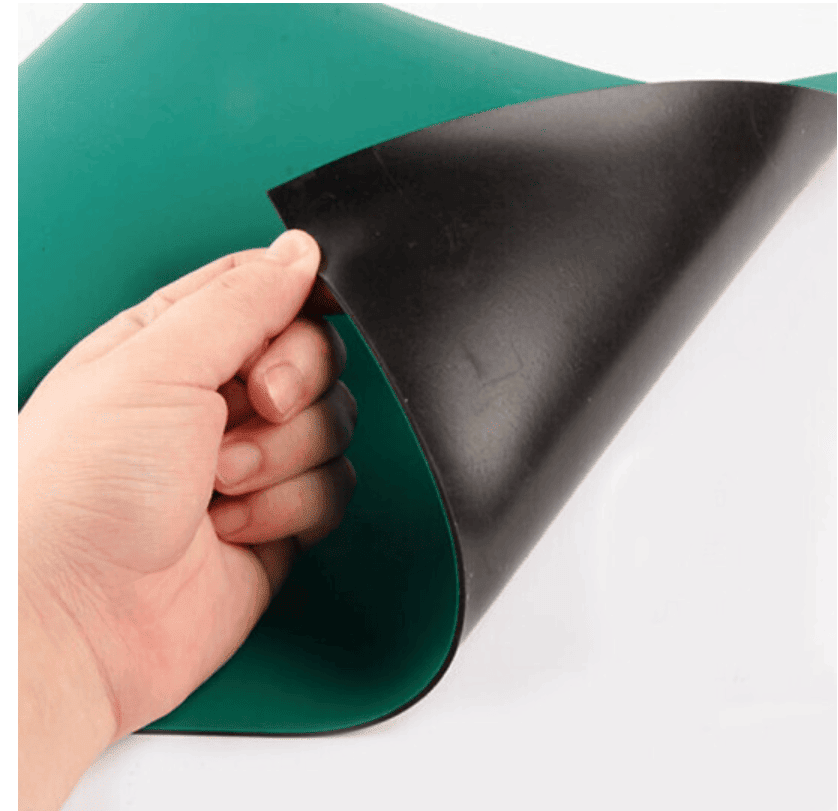
An ESD mat (Electrostatic Discharge Mat) is a specially engineered work surface designed to safely dissipate static electricity instead of allowing it to accumulate.
Unlike ordinary rubber or plastic mats, an ESD mat contains conductive or static-dissipative materials that control the movement of electrical charges. When connected to a proper grounding system, electrostatic charges are safely transferred to earth ground without damaging electronic components.
Typical applications include:
Many electronic devices contain components that can be damaged by extremely small electrostatic discharges.
Approximate Human Static Voltage:
| Activity | Voltage |
|---|---|
| Walking on carpet | 3,000–35,000V |
| Walking on vinyl floor | 250–12,000V |
| Sitting on a chair | 200–18,000V |
| Picking up a plastic bag | 1,000–20,000V |
Many semiconductor devices can be damaged by static levels far below what a person can feel.
An ESD mat reduces this risk by providing a controlled discharge path instead of allowing sudden electrostatic discharge.
An ESD mat performs three primary functions:
Special materials reduce static accumulation on the work surface.
Charges move slowly across the mat instead of discharging suddenly.
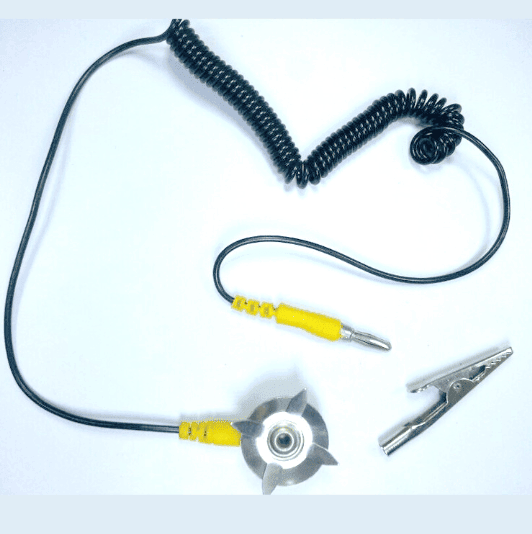
Using:
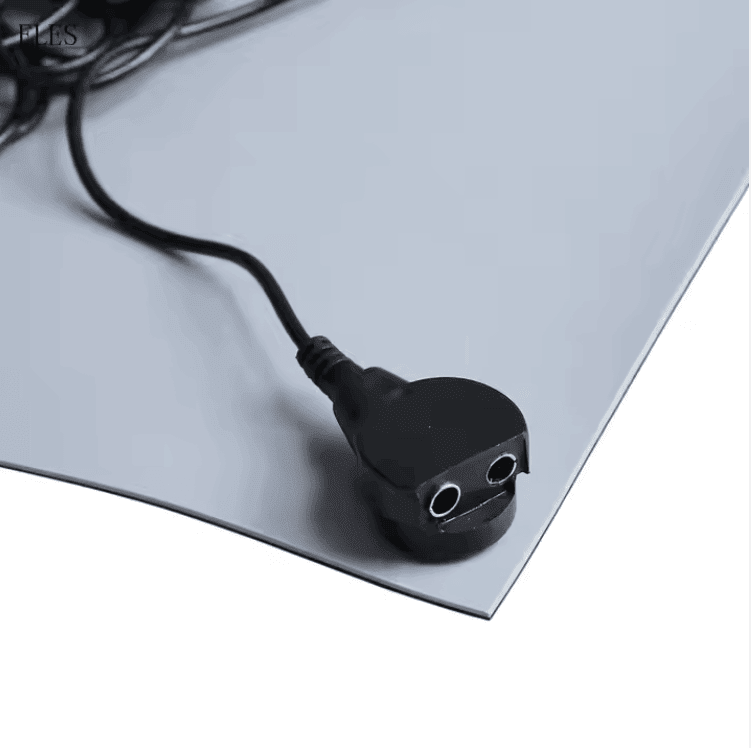
the electrical charge is safely removed from the workstation.learn more: how to ground
A complete workstation usually includes:
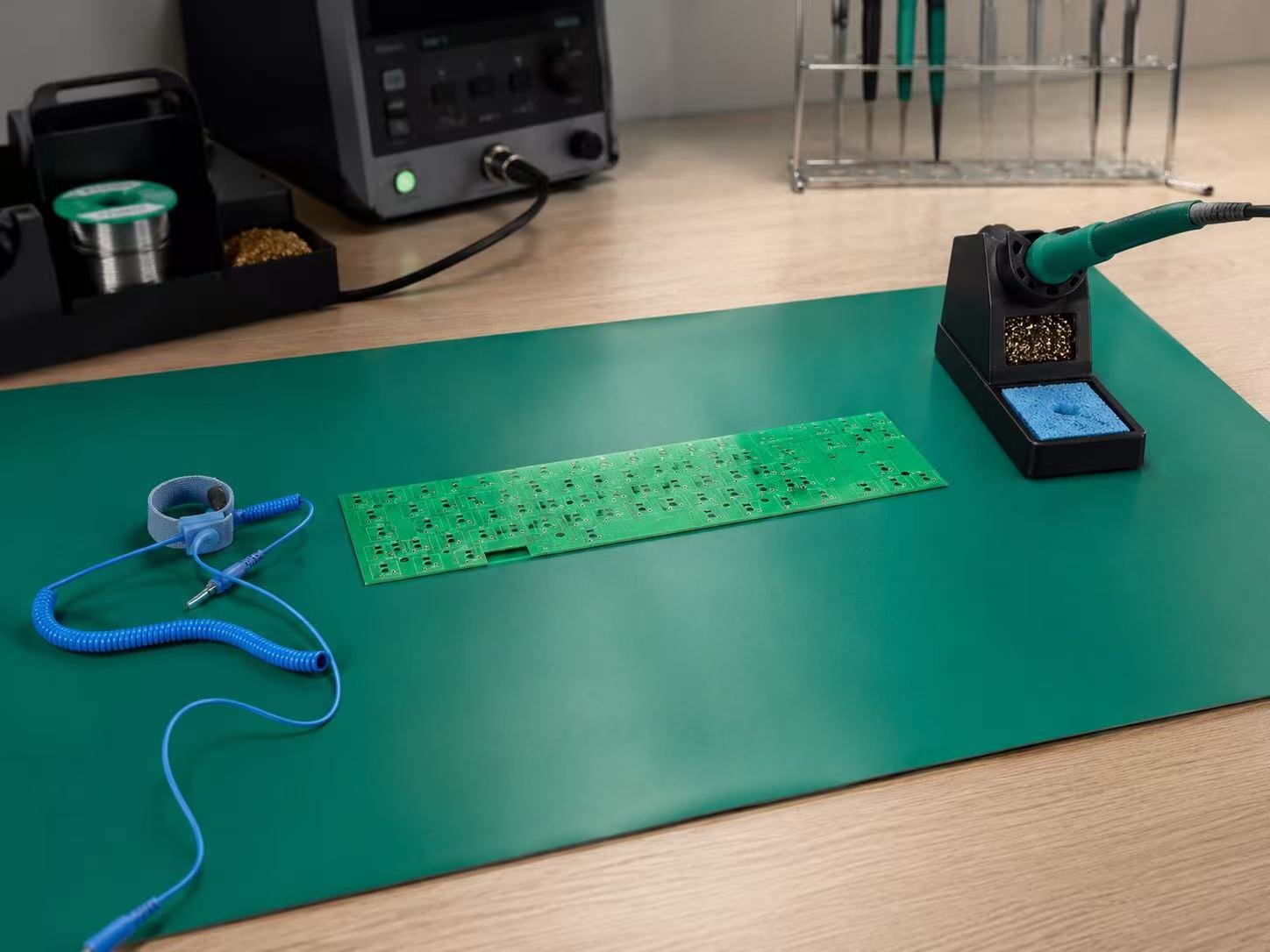
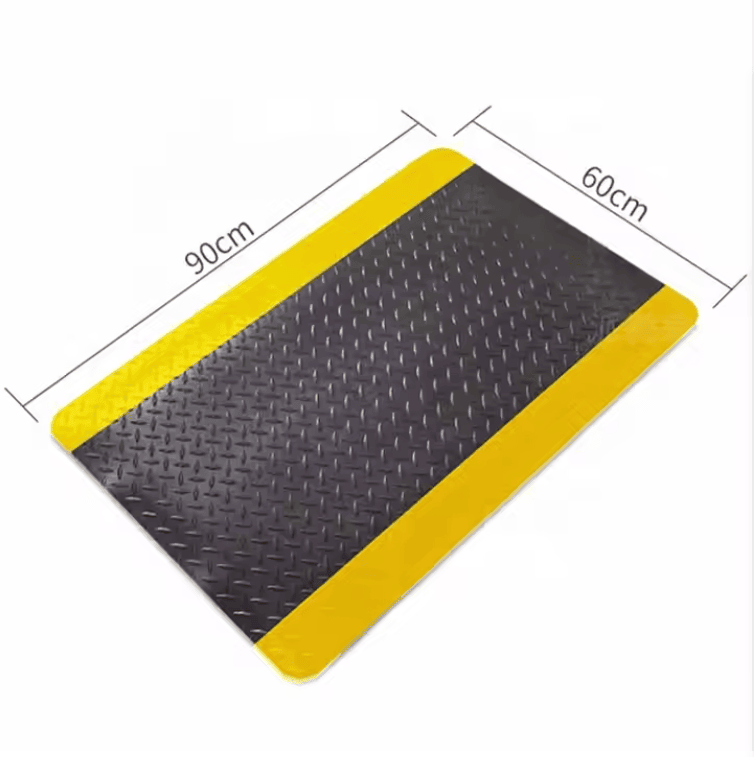
Used on workbenches for PCB assembly, soldering, testing, and repair.
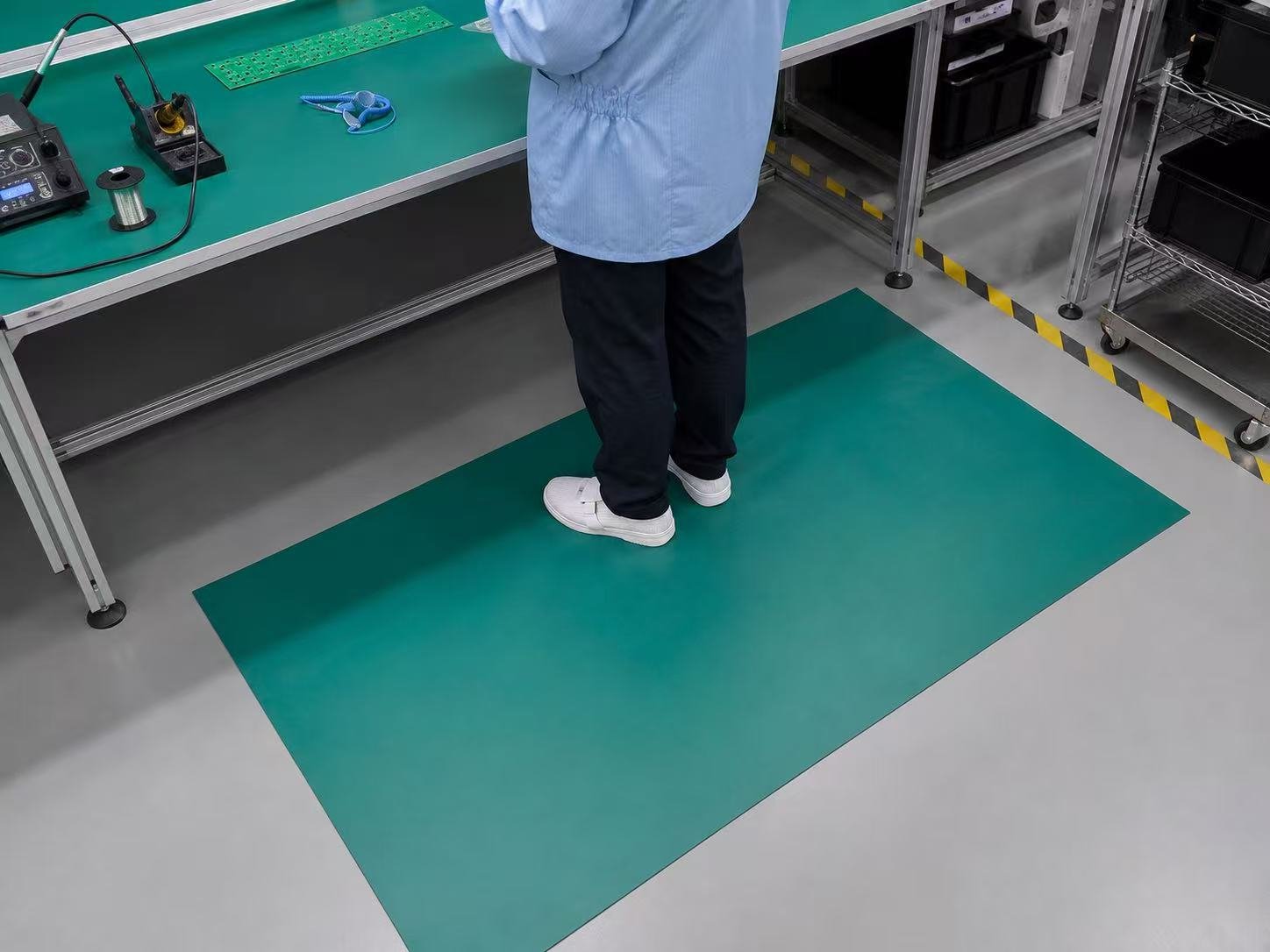
Installed on factory floors to safely discharge static from personnel and carts.
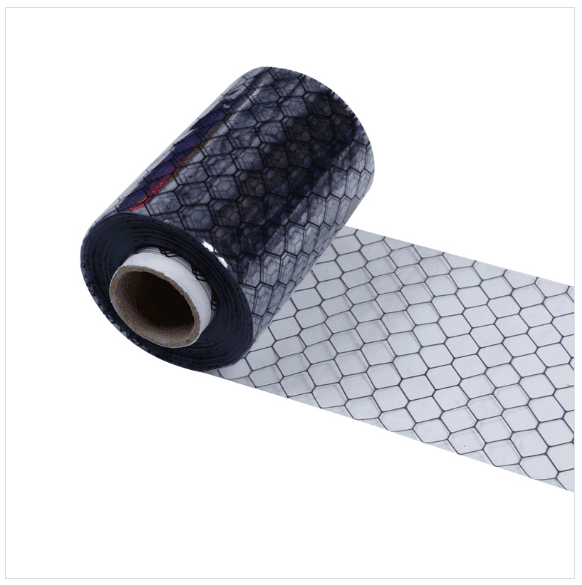
Suitable for laboratories and inspection stations.
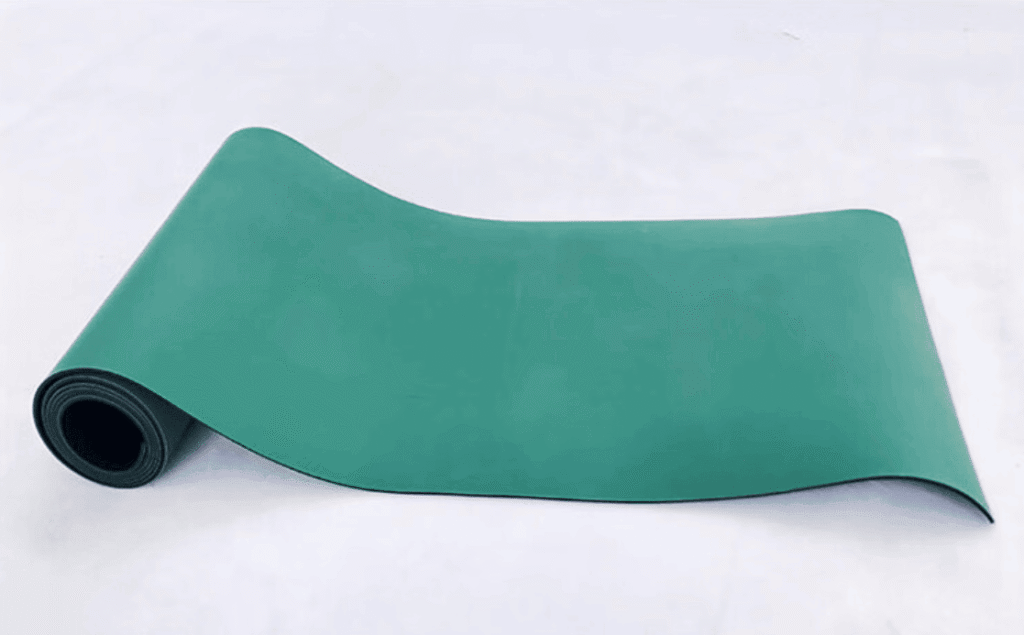
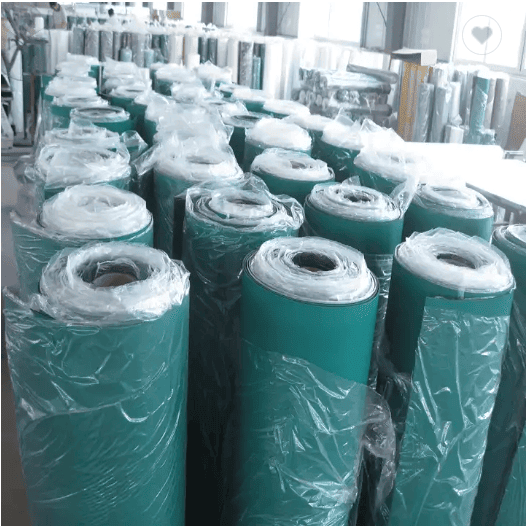
Ideal for large workstations or custom cutting.
ESD mats are generally available in conductive and static dissipative versions.
| Conductive | Static Dissipative |
|---|---|
| Lower resistance | Higher controlled resistance |
| Faster discharge | Controlled discharge |
| Special industrial use | Electronics manufacturing |
| Higher conductivity | Safer for electronic components |
Most electronics factories use static dissipative mats because they discharge electricity at a controlled rate.
Most ESD mats are manufactured from:
Rubber mats generally provide better:
Resistance is one of the key specifictions…
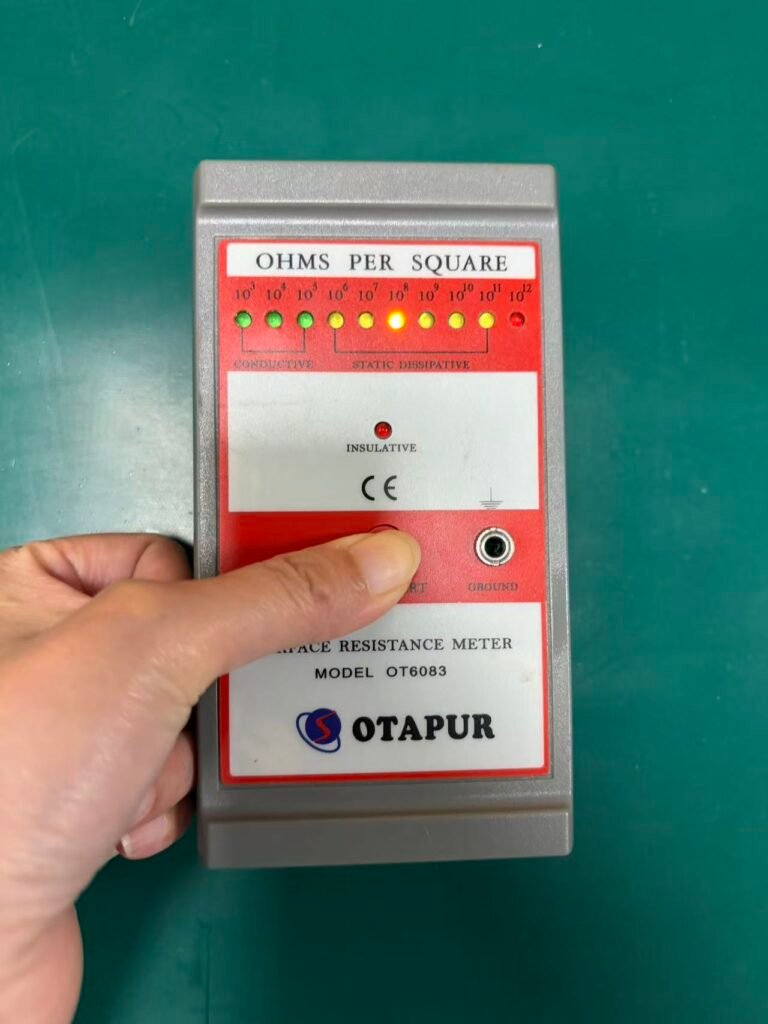
Typical resistance ranges include:
| Material | Resistance |
|---|---|
| Conductive | 10³–10⁶ Ω |
| Static Dissipative | 10⁶–10⁹ Ω |
Always verify the required resistance according to your ESD control program and applicable standards.
Most electronics factories follow ANSI/ESD S20.20.
Common ESD standards include:
These standards provide guidance for selecting, grounding, testing, and maintaining ESD work surfaces.
ESD mats are widely used in:
When selecting an ESD mat, consider:
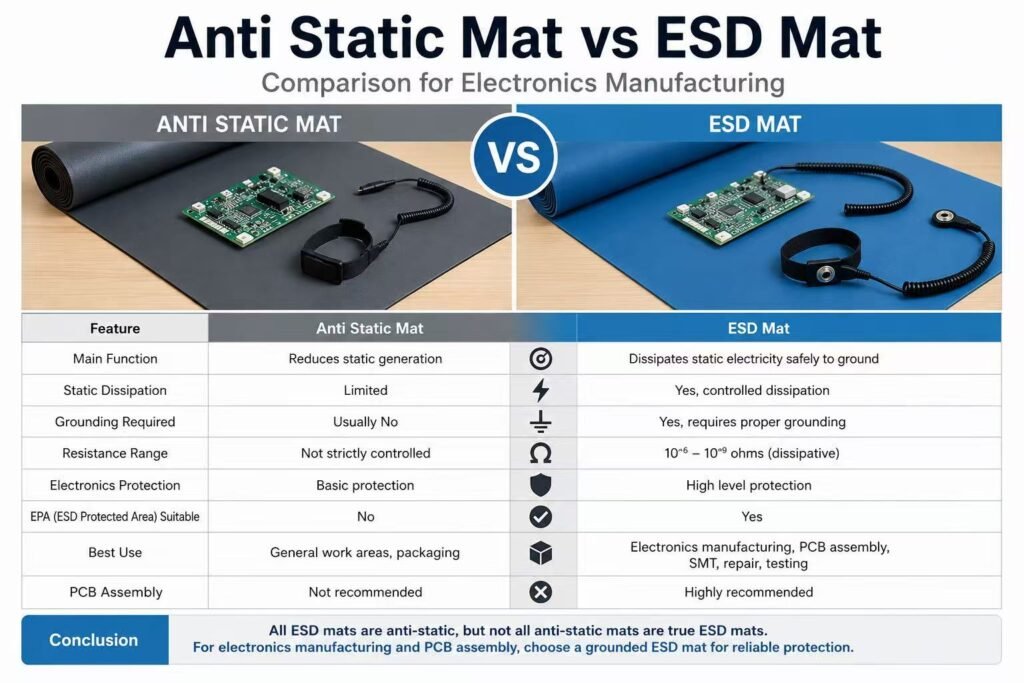
Many buyers confuse anti-static mats with ESD mats.
It provides a controlled work surface that safely dissipates static electricity and protects sensitive electronic components.
Yes. Most ESD mats must be connected to a proper grounding system to function correctly.
No. An ESD mat is one part of a complete ESD control system, which may also include wrist straps, flooring, ionizers, packaging, and employee training.
With proper maintenance and regular testing, a high-quality rubber ESD mat can provide reliable performance for many years.
An ESD mat is the foundation of every professional ESD workstation. By providing a controlled path for electrostatic charges, it helps protect sensitive electronic components, reduce production defects, and improve long-term product reliability.
Whether you are designing a new SMT production line, upgrading a PCB repair station, or building a fully compliant ESD Protected Area, selecting the correct ESD mat—and using it together with proper grounding and testing procedures—is essential for effective static control.
Need a complete workstation?
Explore our ESD Workbench Solutions.
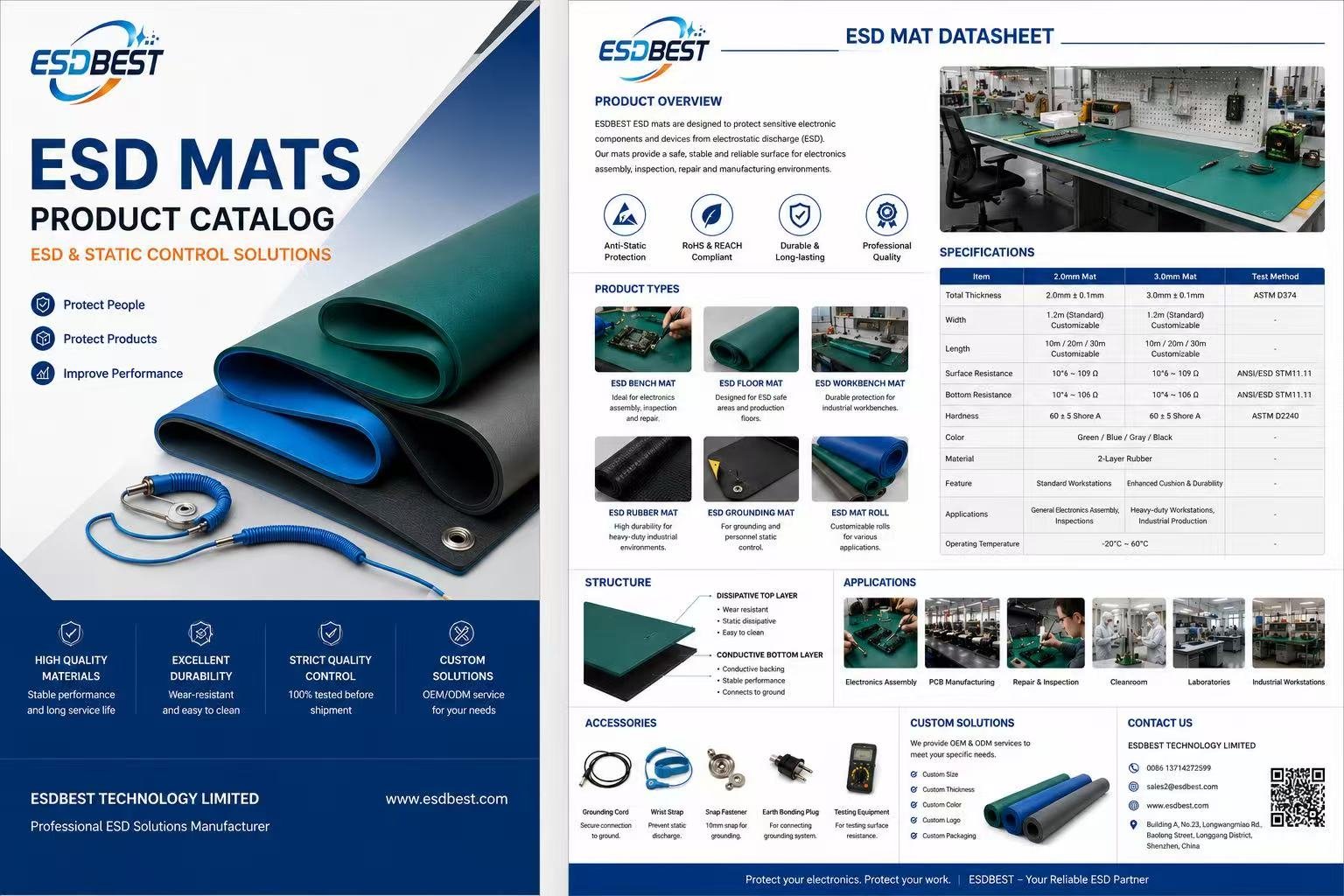
ESDBEST manufactures premium ESD bench mats, floor mats, workbench mats, and complete static control solutions for electronics manufacturers worldwide.
Request a Free Quote Today